
Revisiting the Goon Squad
Jennifer Egan's 2010 novel has been described as one of the best books of the century. Which says more about the people making that description than the book itself. Because it isn't.

A Visit From The Goon Squad is one of the most critically acclaimed novels of the 21st Century.
I mean:
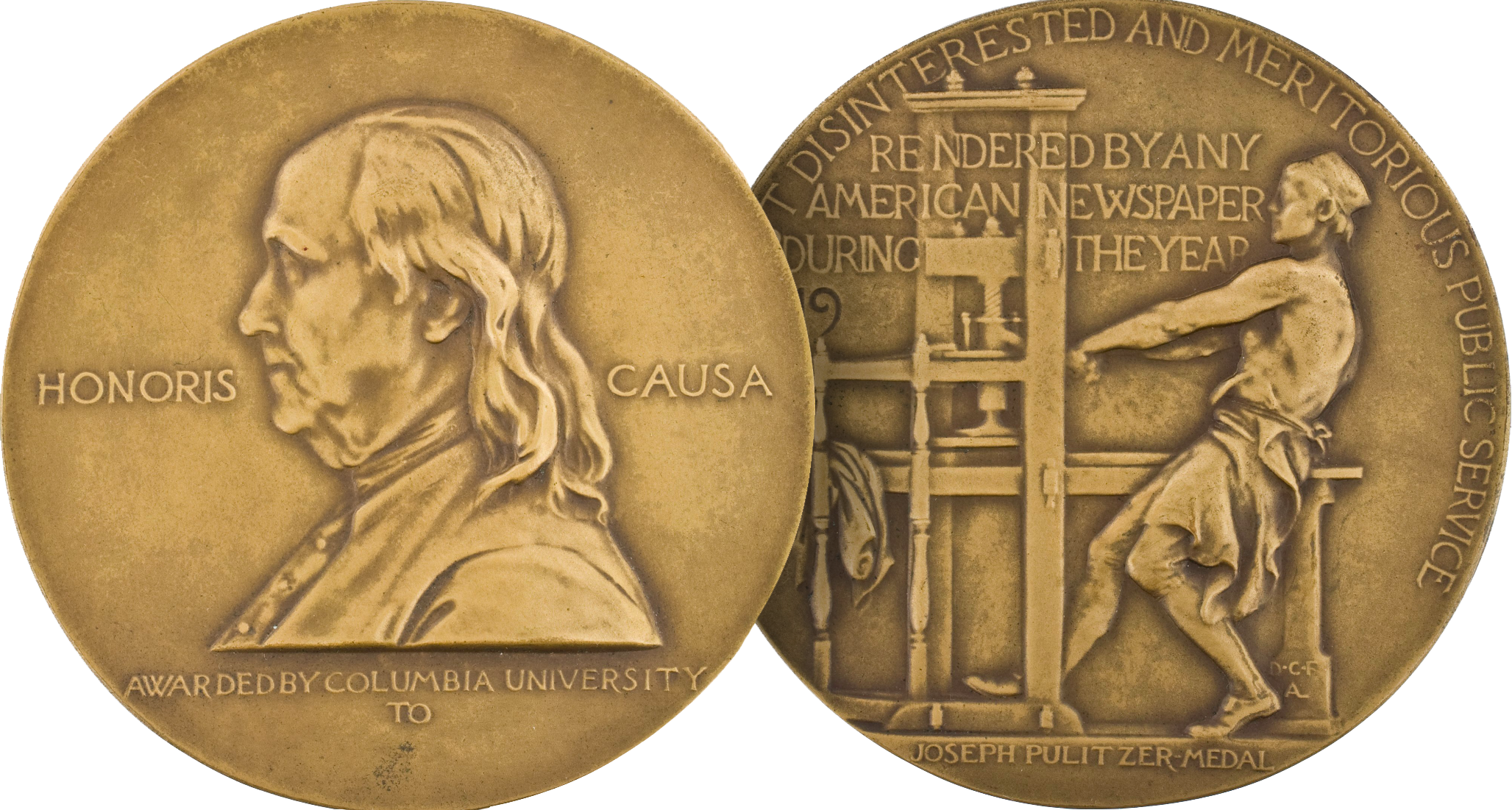
In 2010, it won the US National Book Critics Circle Award (beating Jonathan Franzen’s Freedom). It also won the Pulitzer Prize in 2011, for being “an inventive investigation of growing up and growing old in the digital age, displaying a big-hearted curiosity about cultural change at warp speed.”
And here’s how its other successes are currently listed on Wikipedia:
In 2019, The Guardian ranked A Visit from the Goon Squad as the 24th best book since 2000. It was third place (along with Colson Whitehead’s The Underground Railroad) in a Literary Hub list of the best books of the 2010s, one of the 10 books in Time’s list of the best fiction works of the 2010s, and first place in Entertainment Weekly’s list concerning the same period.
In that Entertainment Weekly listing, the writer Leah Greenblatt described the book as “Jennifer Egan’s 2010 masterwork” and gushed:
… a sui generis achievement, even almost a decade after its release; if her playfully postmodern catalog of delinquents, kooks, and schemers seemed at first merely eccentric for its own sake, the telling of it proved otherwise: a book as rich and resonant as any linear classic in the canon.
Ridiculous.
TRIPPING
A Visit From The Goon Squad is a series of inter-connected stories, featuring recurring characters, ideas and images, reaching back to the 1970s and on into the not-too-distant future. The stories are not arranged in chronological order, meaning that as a reader you are asked (gently and mildly) to think forwards and backwards, to remember names, places and descriptions, to connect thoughts and moments.
This made critics lose their shit:
Trying to “follow” the “plot” of “Goon Squad” is like trying to count the pores on your arm while tripping: tempting, yes, but a distraction from all the pyrotechnical fun. With Egan you’re in the hands of a master, so relax and let it all wash over you: time folding into itself, people running into their former and future selves, and most of all, the writing, the writing, the writing.
That’s a quote from Salon – but I could have chosen many similar instances of one-handed typing.
What I couldn’t find are many dissenting voices.
Because if there’s one thing contemporary critics like even more than being able to use the word “polyphonic” in a review, it’s consensus. After all, if we’re all agreeing, we must be right.
Mustn’t we?
‘MEANT TO BE’
Before I stick the boot in, it’s important to say that A Visit From The Goon Squad is a perfectly decent book.
I read it recently for the Galley Beggar critical reading class and I enjoyed it. I think most of the others in the class did too.
It has many fine qualities.
Jennifer Egan can turn out a good sentence:
Kathy was a Republican, one of those people who used the unforgivable phrase ‘meant to be’ – usually when describing her own good fortune or disasters that had happened to other people.
She has interesting things to say about the passing of time – and her structure neatly makes us question and experience our own faculties of memory, as we try to piece together her fragments of story.
One of those mulit-voiced chapter contains a wonderful description of the shame and embarrassment of being caught stealing.
Another features a very funny – and suitably dark – parody of the monstrous David Foster Wallace.
All of them are pleasantly readable.
In short, give or take some embarrassing attempts at SF in the book’s final chapter and a laborious extended riff on txtspk (already old-hat when the book was published in 2010, never mind our own future), I’d say that the book mainly succeeds on its own terms.
It’s the absurdity of the ongoing hype which is the problem. None of that is the fault of this novel, or of Jennifer Egan herself. (She always comes across in interviews as reasonable, witty and even manages to sound pleasantly surprised by the extraordinary reception the book received.)
SHAG CARPET
This book is not sui generis, as that panting reviewer from Entertainment Weekly claimed. It does not stand alone. It is not, for the most part, even particularly “inventive.”
Yes, there is a chapter written in the form of a Powerpoint presentation. And yes, that chapter works surprisingly well to convey not only some complicated family dynamics, but also the emotions behind them. But otherwise?
Just about everything is tried and tested. Its ideas, form and characters are pretty clichéd.
In reading those ecstatic reviews, I couldn’t help wondering how it was that those avid critics never seem to have encountered other story cycles revolving around different individuals but connected by themes and/or locations.
Have they not heard of Dubliners by James Joyce? Did they miss Sherwood Anderson’s Winesberg, Ohio? Or maybe the books Anderson helped inspire, like Hemingway’s incomparable connected story sequence In Our Time?
Or, to bring up more recent books, did they also miss Tim O’Brien’s The Things They Carried, Denis Johnson’s Jesus’ Son,1 Irvine Welsh’s Trainspotting? What about Elizabeth Strout’s magnificent Olive Kitteridge? That one also won the Pulitzer Prize, and only a few years before Egan.
It’s possible to say that Goon Squad’s connecting stories don’t quite connect in the same ways as in all these books. But it’s less possible to say that there’s anything in its shape that hasn’t been done before.
Maybe it might also charitably be suggested that those critics weren’t just referring to the shape of the book when they hymned the novel’s inventiveness.
But then: there aren’t many other places where anything original happens in A Visit From The Goon Squad. It generally covers ground so well-trodden that the path has become a ditch.
If I told you, for instance, that one of the stories takes place on a safari, would you be surprised to learn that one of the characters has an affair with the “surly” guide? And would you not also be just waiting for the moment when one of the group gets too close to the lions and has his face eaten?
If I told you that another story features two outsiders joining an exclusive Country Club, wouldn’t you just be waiting for their ostracisation – and, yes, more affairs.
Would you predict that every character would survive the story where college friends stay up all night taking drugs? (No. Of course not.)
Would you expect the hubristic party held by a formidable PR person to go well?
Perhaps you might wrongly guess what page the temper tantrum makes its appearance in the story about the African dictator – but I expect you’d easily be able to fill in plenty of the other details.
Likewise, you will already have intimate knowledge of the life of the sleazy 1970s record-company person. You will have some idea of how he treats the women he picks up.
And so on.
Most of the book is set in this clichéd version of the music industry. There is some interest here. When Egan was writing, Napster and copyright theft had sent the music world into freefall and the moguls and artists that Egan describes suddenly felt like relics from a lost era. It’s a good fit for her broader ideas about the vagaries of time and the surprises it can spring.
But the odd thing is that Egan doesn’t seem to care at all about those artists or the music they create. This isn’t necessarily a fault. She’s upfront about this lack of concern. She told the Guardian:
People who read this book tend to think I’m a music geek – but I never really write about my own life. I did once get a journalistic assignment to write about a pair of identical-twin female rappers called Dyme, but it came to nothing – although there’s a bit of their DNA in the Stop/Go sisters in the book: they also lived in Mount Vernon, and had an orange shag carpet in the recording studio that their dad built them, so I got something out of it.
It’s legitimate to want to focus on these externalities. To talk about the visual trappings rather than digging into the feel of the music. There are also plenty of other writers to turn to if you want to read deep soulful guff about chords being played on your heartstrings.
Even so, this lack of concern does also point to why the book is ultimately unsatisfying. There is little beyond the surface anywhere else, either.
Here, maybe, there is a fault. Egan has claimed:
“For mood and preoccupation, my model was Proust. Goon Squad is about time, and Proust is the grandmaster of that realm.”
And, okay, she has plenty to say about the passing of time. But for Proust time also works in the hidden depths and souls of his characters. It makes slow incremental changes, as well as sudden changes, reverses and revisions. It is examined forwards and backwards and from every angle.
In Egan, time just tends to whizz by.
We aren’t really challenged to think about it at all. And so it is for the rest of the book. It is safe and easy, full of recognisable tropes and ideas, essentially conservative.
Which is of course, why the critical community likes it so much. There’s just enough there to tickle our brains and flatter us that we’re being intelligent when we latch onto the big themes about time. But not enough to worry us in any way.
Kafka declared he wanted to take an ice axe to the soul. A Visit From The Goon Squad approaches it with a feather duster.
Even as I write that, I realise it’s not such a bad thing. There’s a place for that kind of fiction and easy pleasure.
A Visit From The Goon Squad deserves to have plenty of readers – and they are right to enjoy it. It doesn’t get that much wrong. It does what it sets out to do. It’s we critics who need to raise our game.
Frustratingly, Denis Johnson was on the Pulitzer Prize shortlist the year after Egan won it with his beautiful novella Train Dreams. But that was the year that the judges declared there weren’t any books good enough to deserve the prize. Go figure.
I agree with you totally. This was, however, a great choice for sparking discussion in the critical reading class. Upon reflection, it feels like a series of pastiches to me now, which use the cliched stereotypes in them to have fun, and my geeky side did enjoy the Powerpoint - although given that that chapter is set in the book's near future, ppt is probably a bit of an anachronism. It was an enjoyable read, but nowhere near as special as the critics made out.
A couple of other contemporary story cycles I've particularly enjoyed are:
- Love in Five Acts by German author, Daniela Krien. Set in Berlin, it follows 5 women's relationships, and the main character in each moves on to be a subsidiary character in the next part.
- The Lucky Ones by Julianne Pachico (which was shortlisted for the Sunday Times Young Writer Award back in 2017) - set in Colombia which has all different PoVs relating to a drugs cartel, and jungle guerillas.
I bought it at the time it came out but didn’t finish it. Not because I didn’t like it. Maybe because I didn’t like it enough. Or because it’s a book that doesn’t need to be finished. That’s to do with me too. I don’t like the finals of sports events but love the opening rounds. I haven’t watched the final episode of Series 1 of Stranger things or the end of the last series. Endings are massively overrated. Has anyone ever remembered the end of anything? (Well, I guess some people must do). But I don’t. Even the day after watching a film I can’t remember the ending. Which is why I write short stories.