

One: Fame
Rejoice! The UK publishing trade magazine The Bookseller recently announced the judges for the British Book Awards.
Here’s the first paragraph of the article:
“The British Book Awards 2026 judges have been revealed and this year includes Prue Leith, Yulia Navalnaya, Ardal O’Hanlon, Jamie Smart and Oti Mabuse among many more.”
Yulia Navalnaya is an admirable leader of the resistance against Putin. Ardal O’Hanlon is a funny comedian. Prue Leith knows a lot about cakes. Oti Mabuse is probably a good dancer. I’m sure they’re all also interesting and intelligent people and I hope they all also like reading.
But can you see the problem?
On this list only Jamie Smart is primarily famous for creating books - and he’s a comic artist.
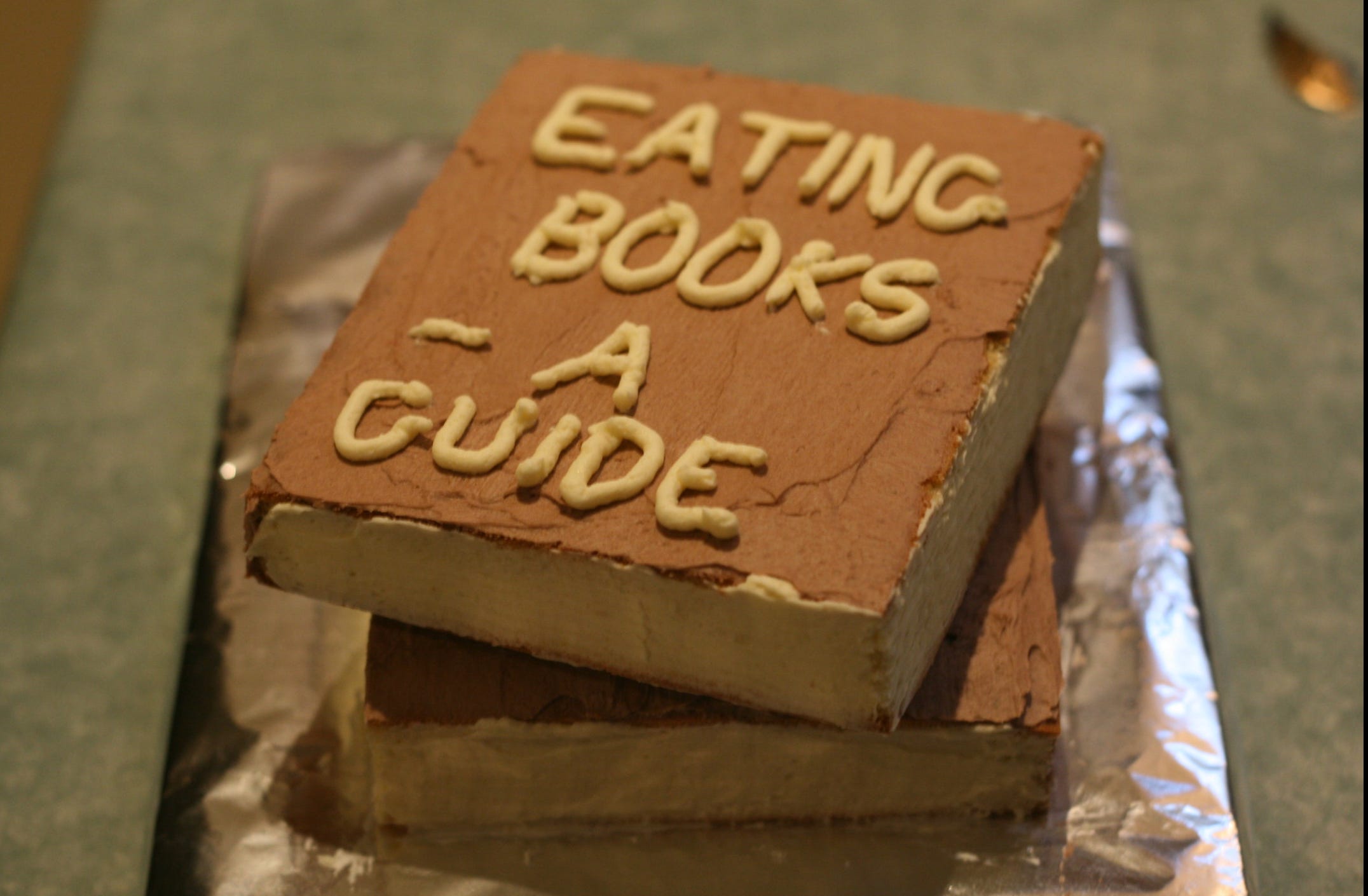
The bigger issue is that even before I saw the list I knew that no prominent positions would be given to writers, publishers or - heaven forbid - critics. After all, why would their opinions count? It’s not like books are as important as baking.
Delving deeper into the article we learn that there are even precious few writers among the ‘many more’ mentioned in that opener:
“Other judges this year are Blue Peter icon Janet Ellis, television presenter and doctor Dr Ranj Singh, BBC One’s The Traitors star and author Harriet Tyce, television presenter Angellica Bell, comedian and author O’Hanlon…”
At least Harriet Tyce is capable of writing substantial and interesting paragraphs. She is also a generous and respected supporter of the book world. But as the article makes clear it’s not her excellent literary record that has qualified her to judge the “book awards”. It’s because she appeared on The Traitors. That’s not to denigrate The Traitors. I love it. I also thought that Harriet Tyce was a superbly entertaining participant. But still.
After O’Hanlon, the professional authors get an “as well as”:
“… as well as authors Raksha Dave, Laura Mucha, and Abir Mukherjee.”
I guess a few token writers are better than none at all.
Philip Jones, editor of The Bookseller and chair of the judges at The British Book Awards says:
“I am delighted with this year’s cohort of judges that brings all the talents together for the tough job of selecting the winners from another incredible year of publishing and bookselling. In The National Year of Reading it is ever more vital to showcase the power of books, and those who bring them to readers.”
At this point, I confess, that I’m uncomfortable making more criticisms. Philip Jones is a fine editor of a decent magazine. It’s a vital - and continually interesting - asset to our industry.
But if the aim is to encourage reading, and showcase the power of books, why aren’t writers front and centre at the British Book Awards?
I’m also curious to know what difference a celebrity endorsement makes to the awards. Does it make many people outside the book world more likely to notice them? Does it mean more to be given a prize by someone you’ve seen on TV than someone whose book you have respected? Does it make them feel more prestigious?
What, in short, is the point?
Maybe it’s also unfair to pick on this particular jamboree, which is there to recognise work done in the long length and wide breadth of the publishing industry - and to generate some much needed publicity. They aren’t about high art. It’s not like they’re the Booker Prize.
And yes, that’s because if they were The Booker Prize they would have asked an actor from Sex and The City to be a judge instead…
Two: Lily livers
My bigger, vaguer worry about this absence of authors on prize panels is that it’s symptomatic of a wider failure of the book world to take itself seriously enough.
One of the most obvious examples of this collective failure of will comes in the continuing absence of negative reviews in the book pages of some (not all!) newspapers and magazines.
This lack is impossible to quantify. Who is counting, after all? And who could count now that so many book pages have disappeared behind pay walls - or have more simply just gone?
But it is still apparent that too few negative reviews get to see the light of day. This isn’t a new idea. It’s actually more than ten years since the disappearance of “Hatchet job of the year award” - a prize that only managed to sustain itself for only three years, painfully enough, since it was designed to revive interest in what was even then seen as a dying art.
It’s also ten years since DJ Taylor wrote this tremendous article for The New Statesman, which still reads like the final obituary for negative reviews:
“A literary culture whose tough-mindedness 20 years ago often verged on outright cruelty, has turned horribly emollient, to the point where it sometimes seems that books are not so much criticised, favourably or unfavourably, as simply endorsed.”
Perhaps “it sometimes seems” is working hard in that sentence. Like me, DJ Taylor doesn’t have hard evidence. But he does share a strong sense that things have gone wrong.
Ten years on, I struggle to remember the last time I came across a quality hatchet job. Every so often a big name critic will be given free reign to provide a corrective to a big name author. Michael Hofmann, thank goodness (and badness), is still writing.
But elsewhere1? There are still fine editors. There are still excellent critics doing valuable work. It still takes more skill and care to write a positive evaluation of a book than to slag it off.
But I also still feel that something important is often missing.
Let’s make it about me!
My personal anecdotal evidence is that several years ago had a review spiked from the former incarnation of The Observer for being “negative.” I was never able to take the book pages of that particular iteration of the paper seriously again. Why trust anything they published if all they wanted was tepid praise? If their critics’ honest opinions - no matter how flawed - were not wanted? Even in my regular spot at The Guardian I sometimes had a few of my sharper edges rubbed off.
On the flipside, I should also admit to an increasing personal wariness about writing negative reviews. I’ve become too aware of my fallibility. I know that I get things wrong, change my mind, and even misunderstand. What if I write something that is not only harsh, but also unfair? What if I cause pain?
Maybe this loss of confidence is another one of the drawbacks of no longer being in my twenties.
I suppose I’ve also become more hesitant because I’ve seen a few reviewers shoot their arrows o’er the house and hurt the authors I’ve published at Galley Beggar Press - and (OF COURSE!) I’ve never felt it’s justified.
Coincidentally, a few days ago, James Marriott quoted some of Martin Amis’ thoughts on his softening process here on Substack:
“Enjoying being insulting is a youthful corruption of power. You lose your taste for it when you realize how hard people try, how much they mind, and how long they remember (Angus Wilson and William Burroughs nursed my animadversions – and no doubt the animadversions of others – to the grave). Admittedly there are some critics who enjoy being insulting well into middle age. I have often wondered why this spectacle seems so undignified. Now I know: it’s mutton dressed as lamb.”
I sympathise.
But then again, I still think the main duty of the critic is to try to tell the truth as he or she sees it. To try to be honest. In other words, the main duty of the critic is to literature - and that also means respecting the person who wants to find out more about literature by reading a decent assessment.
After all, why would anyone ever read a book review if they know in advance it’s going to be lukewarm, pre-masticated pabulum? How can you trust book reviews if you know that their tone and even their message has been decided even before the book has been read.
Also: where’s the rigour?
Literature counts. It has to be properly assessed and measured - and sometimes that involves expressing disobliging opinions. Sometimes that also involves pointing out that some books are barely better than moronic. And some are worse. And that’s precisely what makes the ones that are actually good, the one that can actually change the nature of your soul - that’s what makes them all the more precious.
Culture should be a knife fight?
The explanation most often put forward for this decline in negative reviews is that literary culture is given so little space and funding compared to the glory days of the late twentieth century that writers have naturally lost confidence and swagger. When there is only space in the paper for three short book reviews each week, it’s natural for editors to focus on the ones they want to promote. There’s no space for cut and thrust; no scope for back and forth.
I understand these arguments. But I also can’t help wondering if the softness of some of the book pages contributed to their decline. Is it possible that more people would read them if they dared to be interesting? If they gave the impression that they were dealing with something worthwhile?
I don’t want the few remaining book pages we have to turn into a torture chamber for writers. I’m not asking for a return to DJ Taylor’s “outright cruelty”. We have Goodreads2 for that - and not much good it’s done us.
But I would like to feel that there is something more at stake. I would like to get a different few different textures from reading reviews. I don’t only want to be told that books are just about good enough. I would like to think that writers are contesting for something that really matters. That critics and the reading public are taking them seriously.
I also want to be entertained. To see a few sparks fly. To have a laugh. To open the book pages with keen anticipation rather than gentle resignation.
Three: Blame
I’m asking for a lot, I know. Especially when literature is already under sustained attack from people who would rather that no one had access to the kind of enlightenment that it offers.
The New Yorker has recently declared the death of the book world following Jeff Bezos’ termination of the Washington Post’s book coverage. Really, it should have called it a murder - and the book pages are not the only victims of Jeff Bezos’ assault on the Washington Post. We are all his victims as he helps democracy die and to usher in the darkness.
The only surprise about his actions is the fact that anyone is surprised: that people have expressed shock at the irony that the owner of the world’s biggest bookstore should attack a part of literary culture.
It’s almost as if Bezos hasn’t spent the last quarter century trying to bully and destroy publishers. Almost as if he set up Amazon as a bookstore because he was into literature rather than because that he wanted the lists, data and easy access to the middle class that selling books would give him. As if he hasn’t taken obvious pleasure in his decades of cruelty. As if he hasn’t long been one of the greatest scourges on humanity. As if he hasn’t always been most obviously and catastrophically evil men on the planet.
Bezos deserves opprobrium. He deserves hot loathing. He deserves to be shot off into space strapped to the outside of one of his dick-shaped rockets.
And perhaps my laments about literary culture are small beer when placed against his intergalactic philistinism. It doesn’t matter if the book pages are interesting or not - he’d kill them anyway. In fact, some of the world’s best remaining critics wrote for The Washington Post. Kicking Ron Charles out of a job is perhaps pretty low on the scale when measured against some of Jeff Bezos’ other crimes about humanity - but it’s still an act of vandalism - and it shows that even the most interesting and entertaining writers are not safe.
Four: La lutte continue
Where does all this whinging get us?
Not very far.
But I don’t counsel despair. Because the truth is that there is still good work being done. There are a few decent book sections left. Writers are producing fine books. Publishers are bringing them into the world. People are reading them.
At least some of those books will endure.
They will be remembered long after the cakes have been eaten, the laughter dies down and even Putin finally does the only useful thing he can still do for the world and dies. No matter how many journalists Jeff Bezos puts out of jobs, no matter how many publishers he closes, not matter how much money he cons out of readers, he won’t be able to change the final reckoning. That’s the the one that has him enclosed between two covers with his crimes listed, detailed and explained, and with all his moral and human inadequacy on display beside them.
Bezos is worthless. But books count. They matter. We should not be ashamed to fight for them - and about them.
The philistines won’t win.
Not in the long run.
PS Thank you for all the kind words about my beloved dog.
Sirius Jordison-Millar - Galley Beggar's best friend

This is a letter about the beloved dog who meant so much to Galley Beggar Press, so please don’t feel you have to read it to get literary news.Galley Beggar - Pressing issues is a reader-supported publication. To receive new posts and support my work, consider becoming a free or paid subscriber.
I wrote the grumbling article about the book world before I lost him. But had to talk about him first. I was desperate to tell the world about him, as well as nervous about over-sharing. But he was a big part of my world of literature, as so many dogs are. They don’t write anything, but they do make a lot of the writing better. As well as the whole world.
PPS Please share book recommendations on my Links, Tips and Suggestions post. Bit quiet this month, after a bonanza the month before:

Perhaps in some parts of the book world - and definitely on the Twitter hell sight - people became more willing to criticise authors, even if they rarely dared engage with the art. Books started to be assessed as weapons in the culture war - and judged on questions of identity politics and morality. It’s hard not to be found wanting on those terms. But that just added a layer of tedious sanctimony rather than real critical invective.
Goodreads has risen just as professional book pages have declined. The nastiness and ignorance on display there is a reflection of internet culture, and the way everything Jeff Bezos touches is infected with his mean spirit. But I do also wonder if some people think they are restoring some kind of balance?
A note on the British Book Awards as well Sam - it's run by the Bookseller, which is essentially the trade magazine of the bookselling and publishing industry... Why not have booksellers on the judging panel for the awards as well? (Asking for a friend 👀)
Lots of great critical discussions on the many book podcasts I listen to (Too many Damn books, The Book Review Podcast, Curious Readers, If books could kill. Etc). I think it’s newspapers—print journalism—that may have declined more than criticism per se.