
Comparisons are odious?
What to make of the publishing industry's apparent obsession with comparative titles

[Before I begin: Links, tips and suggestions will be back next week. Thank you to everyone who has commented so far and subscribed. I’m really touched by the warm reception it received and by all the people who signed up. Welcome! I’m very much looking forward to discussing all the books - all of them! - on here.]
One of my favourite moments from Stet, the publishing memoir of the great André Deutsch editor Diana Athill, comes in a chapter she dedicates to the author Alfred Chester.
Chester wanted to persuade Athill to take on his novel The Exquisite Corpse and told her: “It is probably the most unlike book you have read since childhood. And probably also, the most delicious.”
Unlike? Delicious?
Sold!
Like books
A quote like that is custom built to appeal to someone like me.
I’m an editor (alongside my much better half Eloise Millar) at Galley Beggar Press, an avant garde literary publisher. We’ve always made it part of our business to seek out the “unlike” books.
We love books that make it new. We want surprises. We don’t want authors to have to think that their book has to be derivative or familiar in order to find a home.
I imagine that plenty of other publishers would tell you something similar. I find it hard to imagine an editor who wouldn’t love to put out the book that both breaks the mould and breaks through to the reading public.
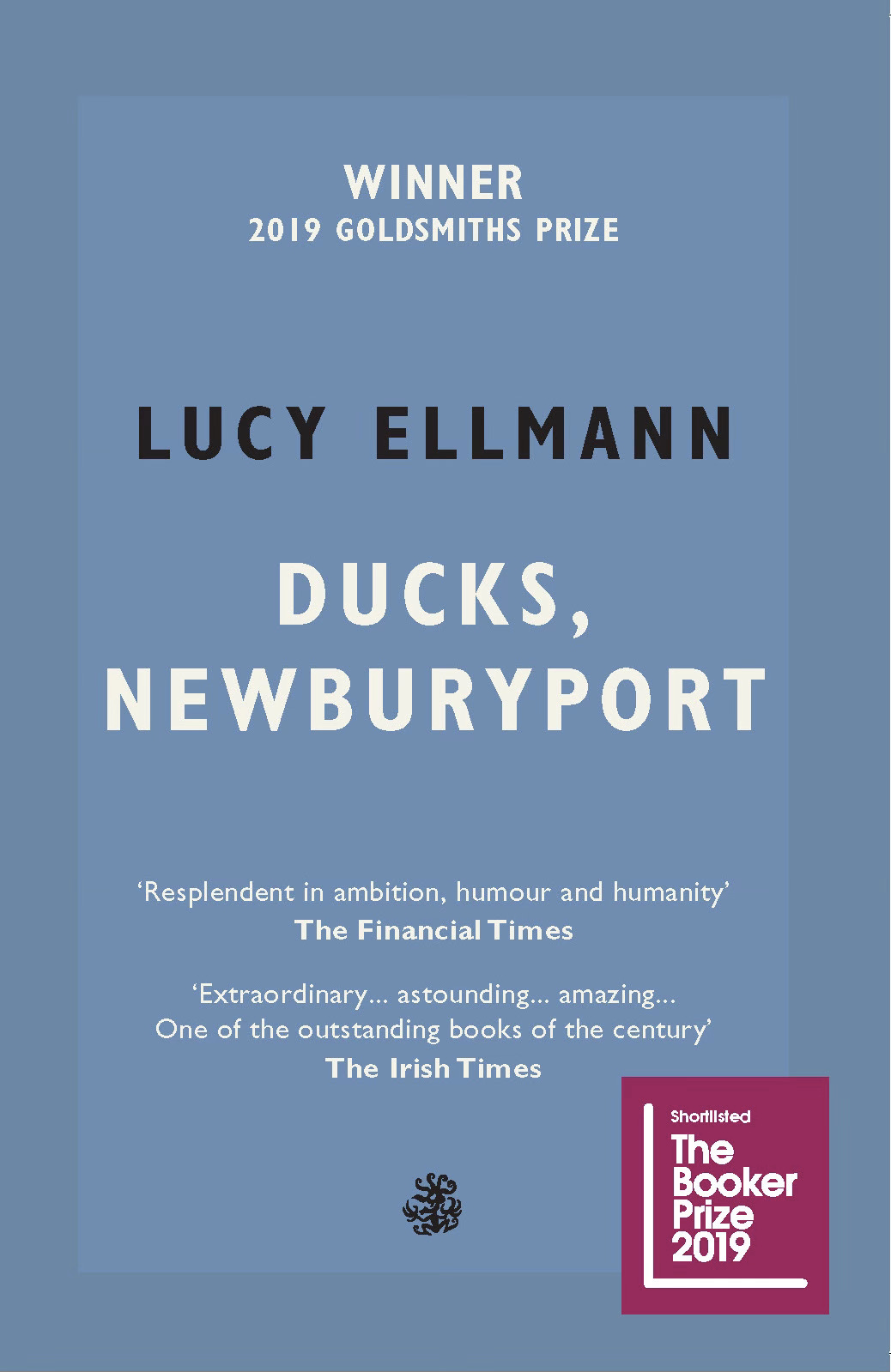
But I’m also guessing that many prospective writers would tell you that they have been given a different impression. That they have been led to believe that if their book isn’t like something that’s already out there, they don’t have a chance.
Certainly, that’s what I hear when I connect with the wider publishing industry. I often speak on panels at meet the agent/editor events run by creative writing courses and literary festivals. I also talk to many writers who are planning to submit books to agents and publishers. Over the past few years, I’ve been asked more and more about comparative titles.
The questions have not only grown increasingly frequent, they’ve become ever more complicated. Writers have told me that agents have told them that they should only be naming books published within the last two years. Or that they shouldn’t compare themselves to writers who are too successful. (Because, after all, no one is going to believe you’re the next Stephen King.) Or that they should follow various and complicated identity politics restrictions on the people with whom they hope to claim affinity. Or that they should have at least three comparative titles. No, four. No, two is fine...
… The iterations seem infinite — but the message is consistent: the gatekeepers won’t let you pass unless you can provide the right kind of comparative title ID. If you can’t tell an agent or editor that your book is just like the other books currently sitting on the front tables of Waterstones, you might as well throw it in the bin.
That’s anecdotal evidence, but I can offer some quick back up. A quick Ecosia search for “comp titles” directed me to just over 3.5 billion web pages explaining “Why you need Comp Titles in traditional publishing (and how to find them” or, worse still, How to use ChatGPT to help you find comp titles.
In spite of all those websites, I don’t want to pronounce with any certainty on how prevalent this trend may be.
I still want to suggest that many of the best agents and editors won’t actually care if an author has an instantly recognisable affinity with A.N Other — and may even be put off by the idea.
I want to suggest that particularly because the idea of comparative titles makes me queasy. I don’t like it. In fact, there’s a big part of me that thinks it’s horseshit.
Comparisons are odorous
Have you wondered why the shops are currently so full of books about people having intimate interactions with dragons? Why a few years ago the shelves groaned and moaned with trauma porn? Why, before that, you had to push past piles of weirdly vanilla vampire stories to get to anything interesting? Why, in short, publishing always seems to go through these fevers? Why this creative industry so often displays such a disappointing lack of imagination?
One potential answer lies in the fact that publishing involves an uncomfortable amount of gambling. Every book you put out is a risk. Nothing is entirely predictable. You don’t know what’s going to take off. You do know that you need luck as well as skill to make things work.
But everyone tries to pretend otherwise. Like so many gamblers, we in the literary world like to tell ourselves that we aren’t saps. We have ways of mitigating those risks. Of turning the odds in our favour. We have a ‘system’.
But all too often, this ‘system’ relies on copying what everyone else is doing.
The hope is that readers who have enjoyed one book will also enjoy an imitation version. The hope is that readers won’t be discerning enough to worry about a title that is feeding off a writer they’ve enjoyed. The hope is that these readers are mugs.
That’s why so many books on the front tables look the same, have similar titles and bespeak an identical lack of ambition.
The demand for comparative titles compounds the problem. It suggests that even before writers starting on a project they should look through the bestseller lists and start cribbing.
But, of course, all of this is actually hugely risky in and of itself. Fashions change and rearrange. It takes years to write a book. It takes months to get it taken on by agents. More months to get it through to a publisher. And then, generally, a year or so before it hits the shelves.
By which time: too late.
Also, crucially, readers aren’t actually mugs. They don’t necessarily enjoy being fed ever weaker versions of the original product. They can tell when a trend goes stale.
Which, I would suggest, is bad news for anyone who is currently thinking of writing some “spicy” material about dragons. Or, you know, a heartwarming walk around England in the style of The Salt Path.
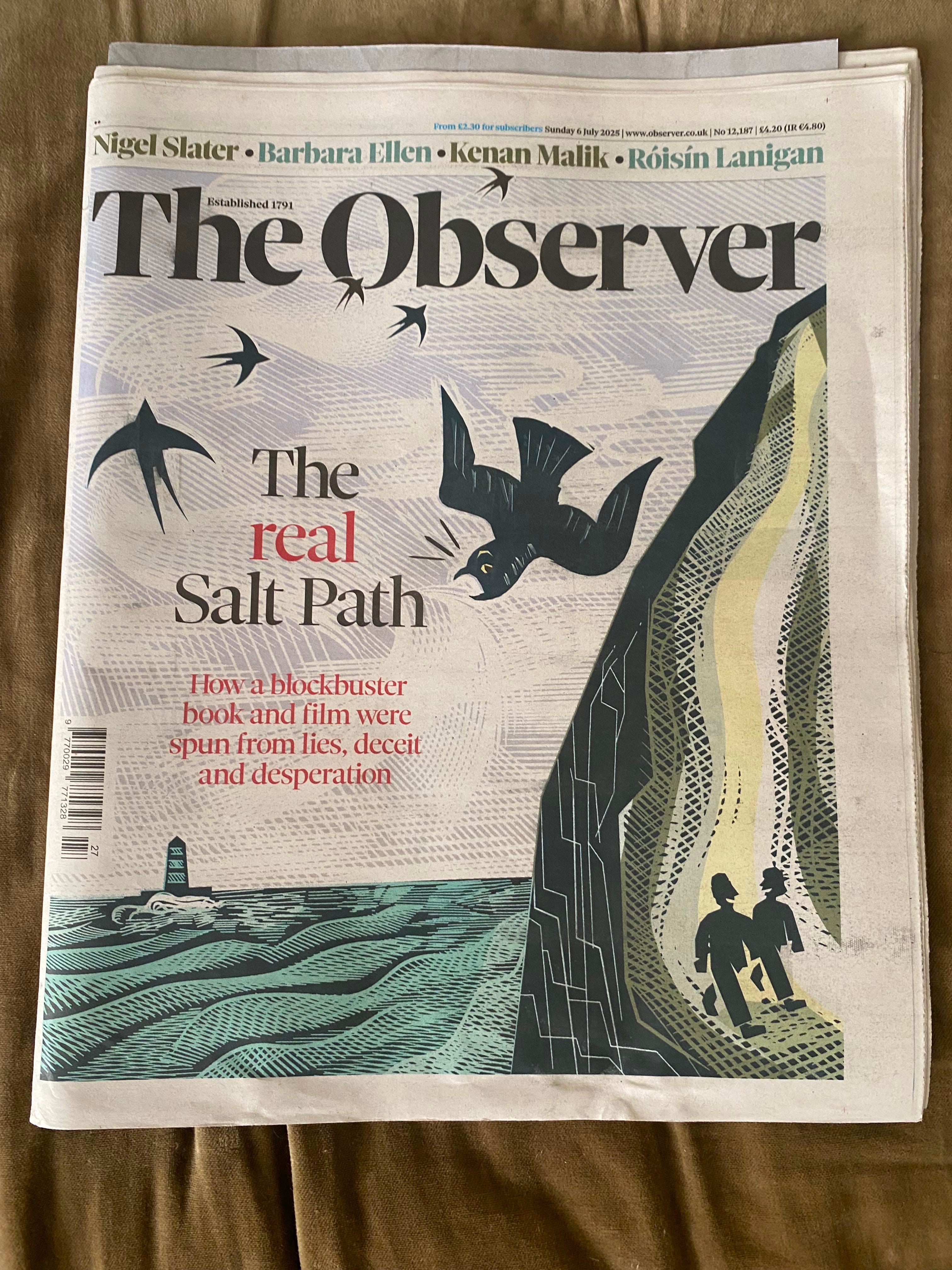
Even without this essential truth about time’s winged chariot, I would worry that the demand for comparative titles puts writers in an invidious position. What’s the option? Compare yourself to someone impossibly good? Or stick with writers bad enough that the kind of philistine that demands “comps” might have heard of them? Do you have to suggest you have nothing new to say? And how do you stand out from the crowd if you’re being instructed to immerse yourself within it?
Crucially: how does the industry move forward if it’s forever looking backward?
Towers of Babel
So much for my idealistic objections. Now, unfortunately, I have to be realistic.
It’s easy to think of book publishing as a two way relationship; a closed loop of the author and publisher. The book is written, the publisher magics it into the world and we both sit back and wait for the royalties to pour in.
But, of course, there are many other people involved. They do important, often time-consuming, jobs. Comparative titles make their lives easier. For instance, they help literary editors (those that remain) work out whether and how to review a book. They give distributors some (relatively) concrete information they can pass on to bookshops. They help booksellers know where a book might fit on the shelf. And when the customer who enjoyed The Salt Path comes into the shop and wants to be uplifted still further? Well then.
If writers can help publishers and agents do their own job more easily by providing useful comparators, that’s clearly going to help with these scenarios.
There’s also the fact that those publishers and agents are also time-pressed, and faced with an overwhelming amount of material to read and process. Any shortcuts are again going to be welcome.
Equally welcome are indications that the writer knows about and cares about the book world. I’ve never met a good writer who doesn’t read. You can tell quite a bit about someone from the kind of books they care about.
More than that.
It’s basic decency to show some interest and care relating to the market you hope to break into. I’m pretty sure no one would complain if an accountant were asked to demonstrate knowledge of tax systems on a job application. Or a lawyer were asked to show a passing knowledge of, you know, the law. So why worry when writers are asked to do something roughly equivalent?
Finally, while I may love to moan about the follow-the-herd fevers in publishing, there is at least one good reason they keep happening: they work.
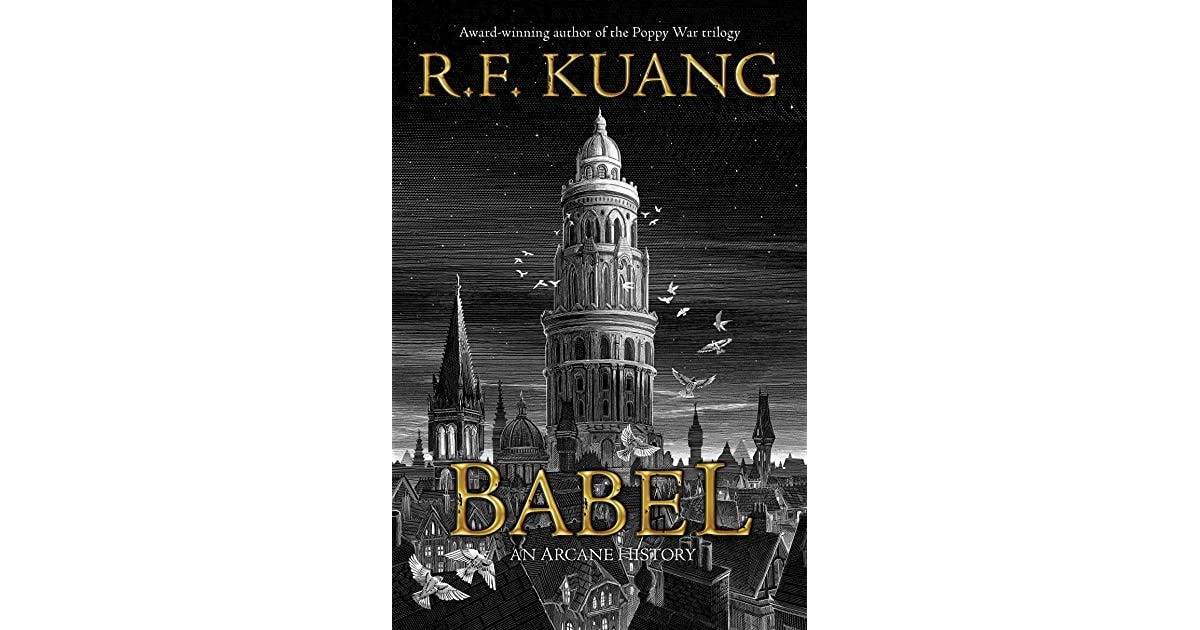
I may want readers to be passionate seekers after knowledge, desperate to be amazed and overwhelmed. I may even be very lucky, because there are such people out there and they help keep publishers like mine going. But there’s still actually nothing wrong with wanting something familiar and comfortable to read. There’s nothing wrong with thinking that because you enjoyed The Secret History, you might also like Babel. It’s a good way for people to find books — and it’s a very effective way to sell them.
I should stop complaining.1
In fact, you could even turn my earlier arguments on their head and say it’s the books that are minimal risks, the ones that sell because they neatly fulfil the demands of fashion, well, it’s these books are often also the ones that help subsidise the more daring titles that have a harder route into the public consciousness.
You could say, in short, that comparative titles are a good thing.
“All but overlooked”
So where does that leave us?
Honestly, I’m unsure. My heart still says that comp titles are a sign of societal decline. My head knows it’s more complicated.
But here are some potentially clarifying closing thoughts.
As soon as I read that quote in the Athill book about The Exquisite Corpse being “unlike” and “delicious”, I wanted to read it. I sought out a copy. That was over 15 years ago now, and I’ve never forgotten it.
In fact, here it is:
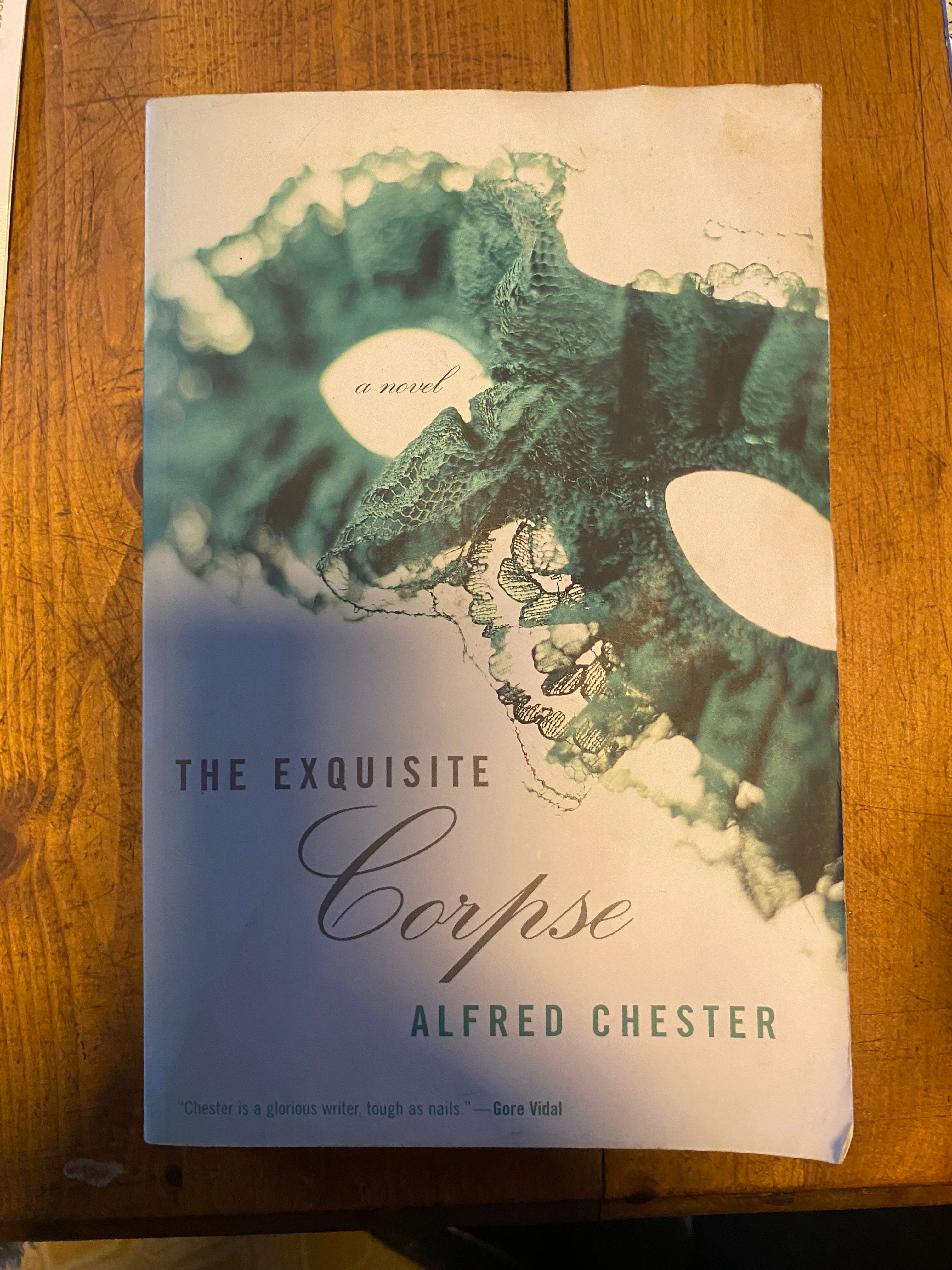
The Exquisite Corpse is, as Chester suggested, highly unusual and impressive. Maybe, it left more of a peculiar taste than a delicious one. Perhaps even a vague hint of rot. Perhaps even a worry about things on the turn. But all that just helped the aftertaste linger. It was quite a book. It was, most definitely, something else.
And that has to be a good thing?
Except:
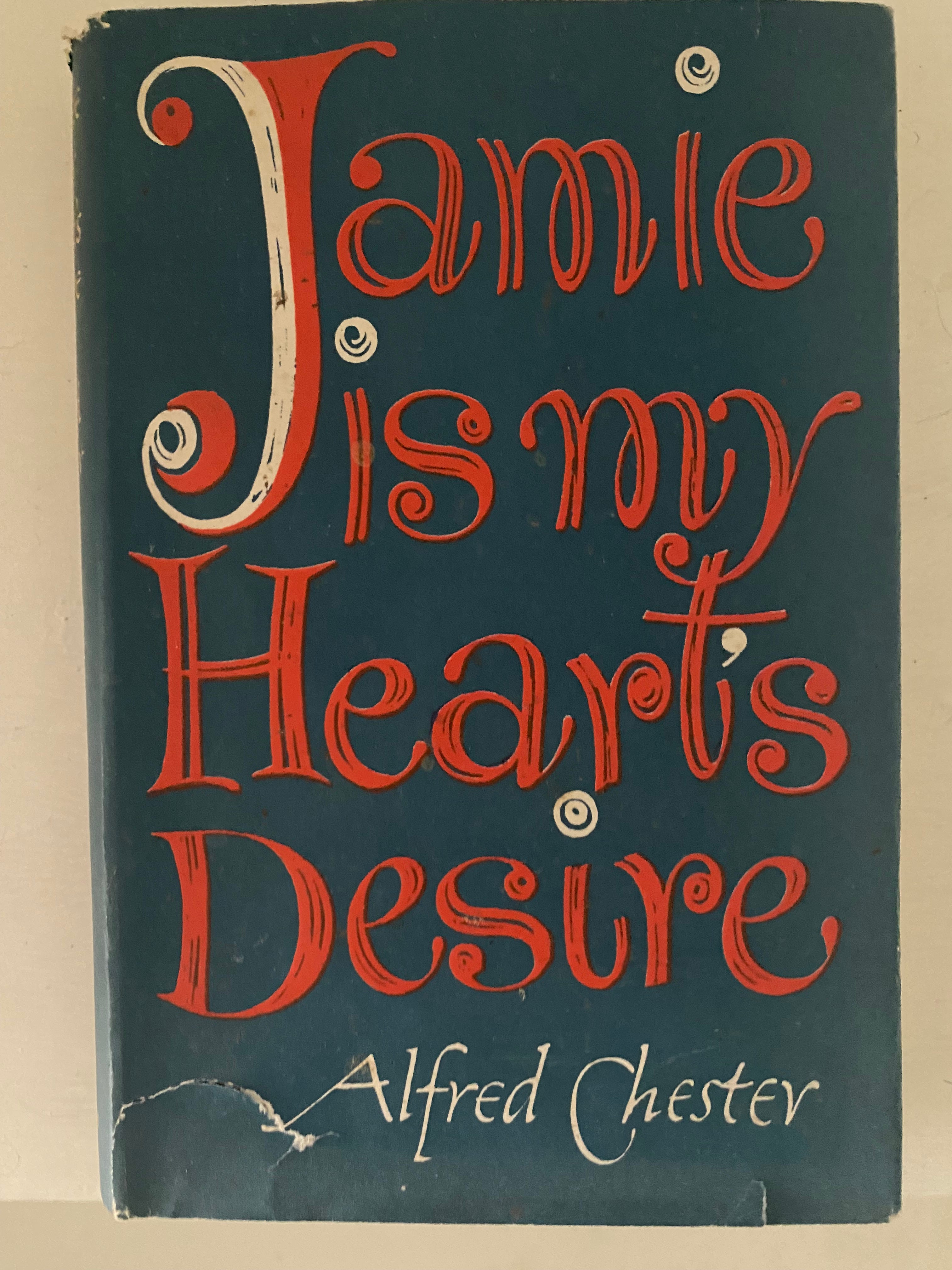
Alfred Chester’s books may have been excellent, but they did not sell. “In England,” says Athill, “he was all but overlooked.” She opened her chapter about the writer by saying: “It is possible I am the only person in the United Kingdom who remembers Alfred Chester and his books.”
So maybe being unlike anything else will only get you so far?
Except - again - and finally:
I still think more people should read this writer. I still think they might enjoy him. I still think his books are worth something.
I still have hope.
Extra bits:
In case you’ve been offline and don’t know why I’m talking about Salt Path, here’s what happened.
And here’s a fun article about other literary fakes.
Essential reading about the Unbound scandal.
On Across The Pond, Lori and I interviewed Jonathan Gibbs about his marvellous2 novel Randall.
I wrote about Under The Volcano in The Times.
A reminder that Links, Tips and Suggestions is back next week. I’m going to be running it fortnightly, at first — I think. I’m still taking recommendations for books people might like to read, so do please comment on the article:
To spare you the effort, I’ll make the joke about how that would leave me with nothing to write about, no thoughts in my head, an empty husk of a man, suddenly derived of purpose, wondering aimless, lost, lost, so lost.
Vested interest alert! It’s a Galley Beggar book.
Query letter protocols have changed over time. Ten years ago they needed to show creative skill, some publishing history and, hopefully, entice with a decent elevator-style pitch. Now - comps: Some titles to get the agent's spreadsheet started, bc they have to pitch the novel, too. It's a stairway of pitching, up up up. Except maybe at indies, like Galley Beggar. I like to think about comparative titles as a way to describe my ideal reader. People who read this and this will also read mine. Lots to think about. I always enjoy your posts, Sam!