
Links, Tips and Suggestions
"Disgustingly lewd" French poetry, Sappho, an absurd (and frightening) attack on Plato, the bloody end of American civilisation and some sustaining literary diversions.

Welcome to the first Links, Tips and Suggestions of 2026.
And how’s this for an opener?
A volume of French poetry, some of which is disgustingly lewd, may seem unsuitable for review in this place: but I find it worthy of consideration, and seize this opportunity to address matters long dear to my heart. I’m concerned with the purity of a great woman: I’m not afraid to put my hands in shit.
That’s the first paragraph of Wilamowitz-Moellendorff’s 16-page (16 page!) review of a book called The Songs of Bilitis, written in 1896.
I came across it in this tremendous article by the classicist Cat Lambert in Aeon.
Lambert explains that The Songs of Bilitis purported to be a newly discovered treasure-trove of Ancient Greek verse written by a woman who knew the poet Sappho. This newly uncovered poet was, supposedly a lesbian like Sappho, and had written plenty of suggestive verse on the subject. It was this idea that disgusted Wilamowitz-Moellendorff; as well as the idea that Sappho herself might not accord with his homophobic world view.
Wilamowitz was smart enough to detect that - of course - these Bilitis songs were fake (it soon emerged that they had in fact been written by a French man called Pierre Louÿs), but the angry German himself promulgated the false idea that Sappho was, as Cat Lambert explains, “not, in the lingo of the time, a ‘tribade’, but rather a schoolteacher preparing girls for society and marriage with men.”
Here’s Wilamowitz - in his time a renowned philologist, as well as a prude - looking suitably censorious:
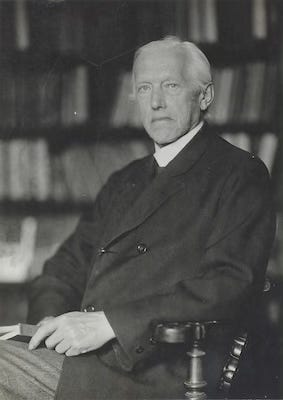
Is he a relic or a vision of the new future? Anyway, Lambert’s article is full of fascinating details about the Bilitis saga, the cheering way that groups of women managed to reclaim something for themselves from this fictional character - and about the original and real Sappho. It’s worth your time.
Bad Form
Sadly, not everything to do with US academics and the Classical world is equally delightful. The New York Times have just reported that a Texas philosophy professor has been told not to teach a course on Plato thanks to a policy that states courses may not: “advocate race or gender ideology, or topics related to sexual orientation or gender identity.” The professor was told he must either ““mitigate” his course’s “content to remove the modules on race ideology and gender ideology, and the Plato readings that may include these” … or he could be reassigned to an ethics and engineering course.
You don’t need me to tell you that this is bad. Let’s just hope that those US Republicans don’t find out what happened to Socrates and start thinking that reassignment is a light punishment for thoughtcrime, especially now that they have started murdering poets on the streets.
Your recommendations
That’s probably as much as I can take from the world outside. Oh well. Literature will continue to inform and sustain us.
On that note, here are two fine tips from Paul:
The book that blew me away these past few months was Fran Ross’s Oreo. Easily the funniest book that I have read in years. I laughed out loud at least once every few pages. I don’t want to describe it too much, because it just needs to be experienced. It felt like a gritty 70’s Blaxploitation flick written by Mel Brooks, directed by John Singleton and choreographed by Quentin Tarantino. It’s zany in the best way possible and it is gloriously full of Yiddish. It has that truly New York melding of Jewish and Black cultures into a unique stew of inner-city slang and conflict. The slang, the mush-mouth pronunications, the rhythm and wordplay... the book is gloriously untranslateable.
The other mind-blower was not funny at all. The opposite, it was truly a sobering, sometimes terrifying look at the marginalization of the mentally disturbed. Janet Frame’s Faces In The Water was a far better look at the life of the institutionalized than either The Bell Jar or One Flew Over The Cuckoo’s Nest and I have loved both of those books. The different levels of degradation, the howling, mewling, bludgeoning, screeching, the caprices of the nursing staff that defined levels of treatment, the lack of rigor or clinical structure underlying mental health treatments was truly eye-opening. It’s almost a wild-west of medicine, therapies founded on cockamamie theories that send electric current through your brain or an ice pick through your eye socket. It was a book full of shame and absolutely understandable terror.
Last month on this blog, I also discussed the Kate Clanchy controversy. One positive that emerged from the discussion was that readers started recommending her books. D LO, for instance, wrote:
I read her book Some Kids I Taught and What They Taught and dare I say found Kate Clanchy work inspirational - as a teacher perhaps my focus was on her teaching practices and the challenges of teaching...I bought her book How to Grow Your Own Poem which I warmly recommend - especially to teachers; I found it useful. So I am grateful to Clanchy for ‘helping’ a fellow teacher. I think she deserved the prizes she got.
Lovely. D Lo also also provides a useful warning:
For the last 3 weeks I have been ploughing my way through A.S.Byatt’s The Virgin in the Garden...don’t quite know what to say. It is tedious for the most part - if you have never read Byatt better to start with Possession, otherwise you might be put off.
Funnily enough I made a similar mistake, years ago, when I tried to read Still Life. I was too young to understand what Byatt was on about, and didn’t read anything more by her for years. Until I finally had the joy of reading Possession and realised what I was missing (and what a fool I had been.) Turns out she was wonderful.
Here’s a serious recommendation from Liam:
Current reading has been the rather unique Brenner by Hermann Burger (translated by Adrian Nathan West). I loved the careful construction of its sentences: the blending of reminiscence, literary analysis, and crystalline descriptions of places. I also learnt a lot about the tobacco industry (the leaves are fermented!) I would like to read his earlier work (all works are ‘earlier’, he committed suicide two days after ‘Brenner’ was published) ‘Schilten’, but it is as yet untranslated.
Finally, a successful adaptation. Annabel Gaskell has enjoyed the Netflix version of Denis Johnson’ s Train Dreams:
Such a wonderful quiet film, true to the text, beautifully shot and acted. It makes me want to re-read the novella which is one of the best short novels I’ve read.
It is indeed a beautiful book.
There are quite a few other film adaptations on the horizon, meanwhile. I can’t wait for Wuthering Heights, which looks suitably restrained. And the soundtrack? Oh my god.
I have to admit to being less excited about Hamnet, in spite of the presence of Paul Mescal. But maybe I’ll be proved wrong… Maybe…
Hothouse Bloom
One last thing. It feels like a while since I’ve plugged the podcast I co-host with Lori Feathers, so I hope you’ll forgive a quick bit of self-promotion now. Not least because we just had an engrossing conversation with writer and musician Austyn Wohlers about her excellent book Hothouse Bloom, which I’m also glad to recommend. The conversation takes in farming (yes, farming), escaping from the world and getting the words down. She is definitely a talent to watch. (Download and get details on the podcast here.) I’ve also been enjoying Austyn’s album, and its title: Bodymelt in the Garden of Death.
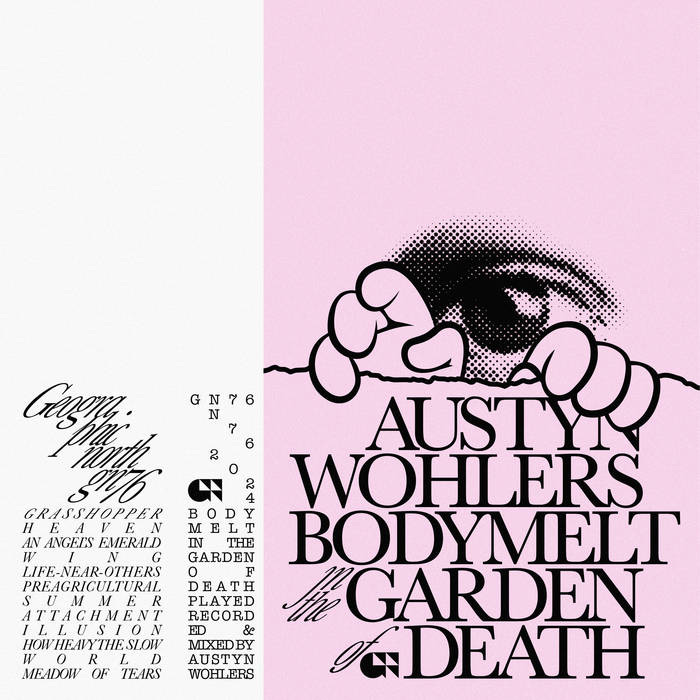
I’ll be back with more soon. In the meantime, please do share all literary recommendations and let us know what you’ve been reading in the comments (if on the browser version of this newsletter). And please share any other literary ideas that might be on your mind. I’m interested!
Sam
My book of the year for 2025 was Muckle Flugga by Michael Pedersen - the debut novel from the current Scottish Makar. It's a coming of age story set on Shetland's northernmost (formerly) inhabited island with its lighthouse. The lighthouse keeper is a stern man of repressed emotions who doesn't understand his son, who is otherworldly, a bit neurodivergent, a passionate reader and craftsman, and motherless (she is presumed dead). When they take on a bird-watching artist as a lodger in the island's other cottage for some extra cash, the relationship between father and son will come to a climax as the son gets a feel for the mainland world through the lodger. Beautiful, poetic, very Scottish, I fell hard for this novel.
Spoiler alert. IMHO you’re right to be less than excited about Hamnet.