
Links, tips, suggestions
Book recommendations for December, news about counter culture, revisiting Oral Sadism and The Vegetarian Personality, warm words about David Szalay, less warm words about Sensitivity Readers

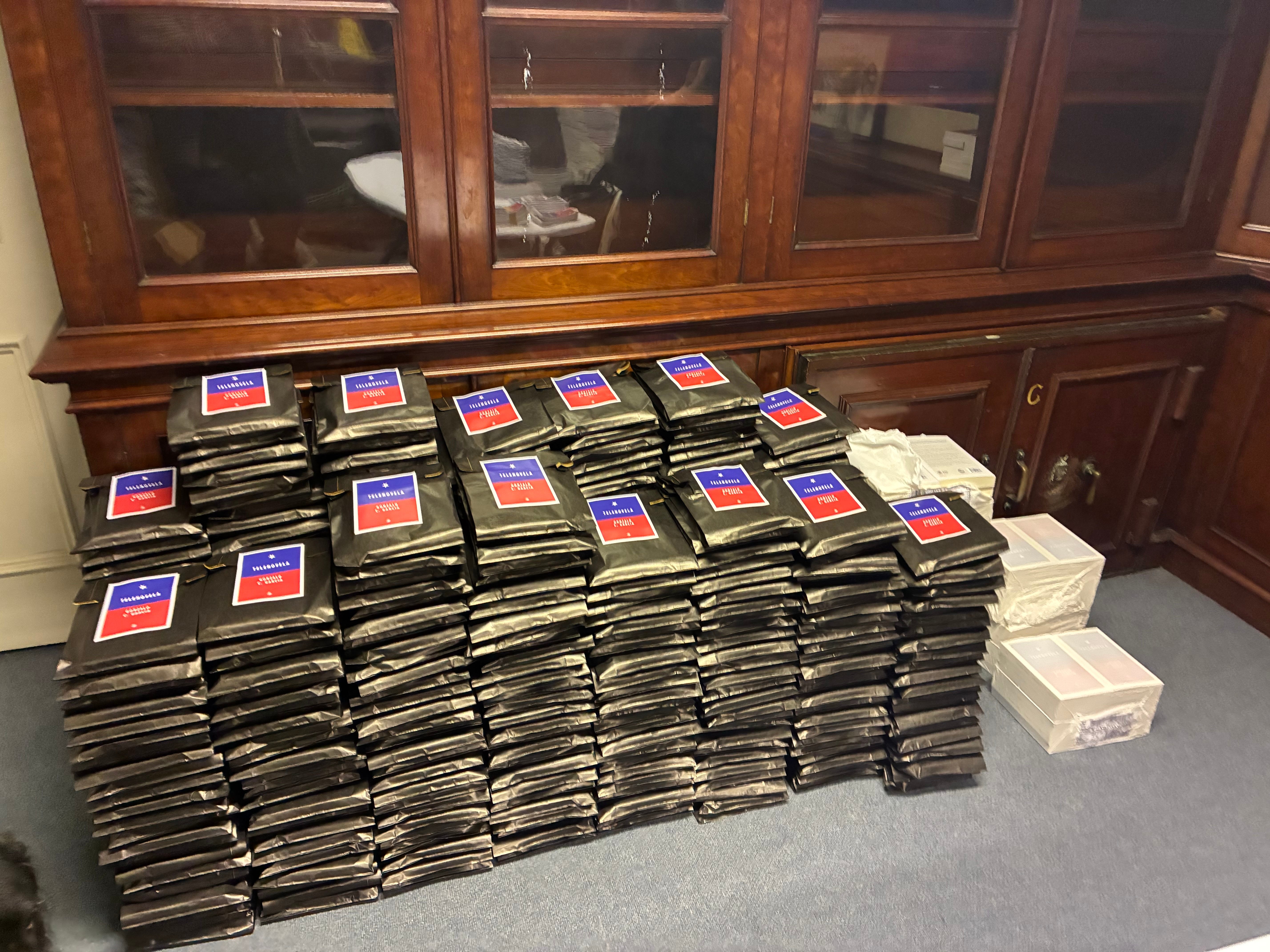
Welcome back to this slightly more irregular than usual newsletter, where you share reading tips and I share a few links and ideas. Apologies if you’ve been waiting for an update since last time. I’ve been busy publishing a new book.
Anyway! It’s most definitely time to share some of your excellent recommendations:
Annabel Gaskell writes:
I have greatly enjoyed reading Children of Radium by Joe Dunthorne, in which he explores his German Jewish ancestry, particularly that of his great-grandfather, who made radium toothpaste and later found himself working on chemical weapons for the Germans in the 1930s before escaping to Turkey. Dunthorne tells the moving and shocking story with great skill and pathos, but also with self-deprecating wit. Superb!
Also, it’s Nonfiction November in the book blogging world and I’ve read three cracking memoirs by the coolest people: The gritty A Mind of My Own by Kathy Burke shows how she’s done it her way; Vagabond by Tim Curry shows how he did it his way; and I Shop Therefore I am by Mary Portas shows how she got them to do it her way!
(You can find more blogging from Annabel over at the excellent Shiny New Books.)
A report fromTom Mooney:
Currently reading Skippy Dies by Paul Murray, more than a decade late. It’s an absolute blast, like a literary Irish Inbetweeners. I never fancied The Bee Sting when everyone was reading it a year or two ago but will endeavour to get to it now.
M.J. Hines liked some of the suggestions from last time:
An additional signal boost/bump for Lonesome Dove and Charterhouse of Parma, they’re both phenomenal. I’m also near finishing Svetlana Alexievich’s Second Hand Time and that’s also a strong recommend - it’s such an astonishing achievement that I’ll probably end up re-reading it straight away.
Jordan Acosta has been doing some quality listening:
After a slow start, the late Michael Jayston’s narration of le Carré’s Our Game has really grabbed me. It’s been a while since I read one, but I’m deeply appreciative of a book with complex characters, motivations, plot and geopolitical consequences. A refreshing antidote to popcorn books.
And it’s rough with the smooth from Elizabeth Eva Leach:
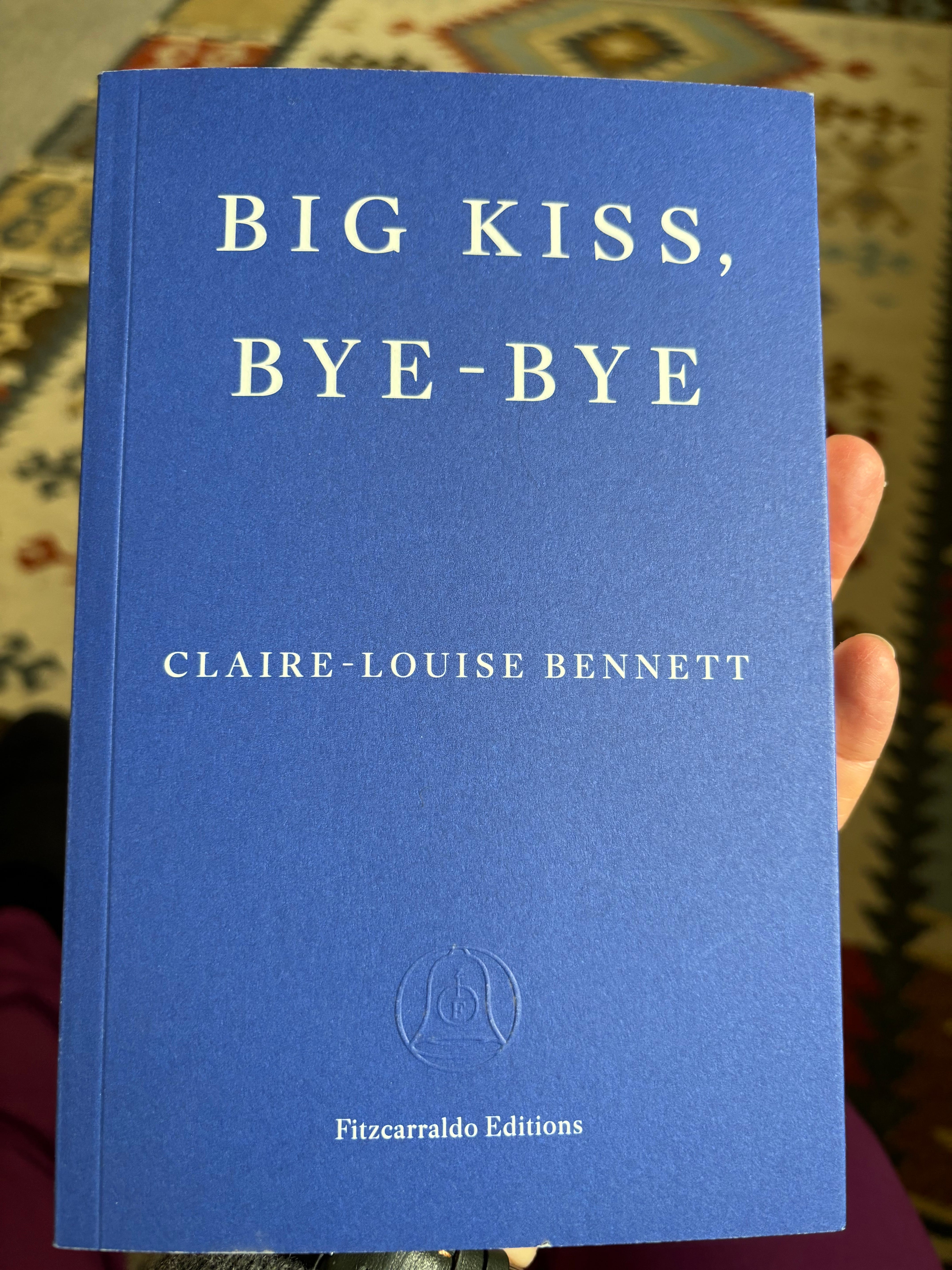
Have been underwhelmed by the new hardboiled and hyper-stagey Pynchon but much enjoying the new muddled-loquacious Claire-Louise Bennett:
Please share your own recommendations in the comments below.
Meanwhile, here are a few bits of the internet that have snagged my attention (when I haven’t been busy lugging great big bags of books around Norwich):
Crooked-cross Factor
Anyone called W. David Marx who decides to write political history has to be made of stern stuff - and it sounds like there’s plenty of interesting material in Blank Space - his new book about the rise of the thuggish Proud Boys organisation - and why racism and plenty more associated vices and horrors started to appeal to a certain kind of wannabe edgelord.
The general thrust is that a rightwing counter culture started to rise when artists stopped innovating, everything became bland, and the consensus and political assumptions of the people who controlled the means of cultural production became oppressive.
In The New York Times, Jennifer Szalai explains that there was: “a ‘pluralistic monoculture’ that became synonymous with a liberal establishment — one that exalted inclusivity and commercial success, while taking its own dominance and appeal for granted.”
So it was that some of those who like to kick back against taboos and mainstream taste found a leader in Gavin McCinnes, the founder of the Proud Boys, who declared:“I think hate is great. It’s super!”
Like Szalai, I’m unsure that Marx’s reported thesis that a new kind of modernism might give these kinds of creeps the boundary-pushing excitement they crave. I’m also not keen on the idea that Taylor Swift represents a lack of cultural innovation. (Her last album might have been a slight misfire, but she’s still an original genius.)
Still, it’s clear I should actually read the book before drawing any more certain conclusions - and that doing so is going to be enlightening. I can certainly get behind the idea that we need more excitement than bland monocultures can offer.
Alas, Szalai ended her article by writing that it’s time to “make cruelty cringe again.” It’s all too easy to imagine the sneering at that.
Oral sadism
There is still time to vote on the Bookseller’s annual Diagram Prize for the oddest book title of the year. Titles in contention include: Why the Hindenburg Had a Smoking Lounge: Essays in Unintended Consequences, The Pornographic Delicatessen: Mid-century Montreal’s Erotic Art, Media, and Spaces and Whack Job: A History of Axe Murder.
Perhaps not a vintage year. But then, how to compete with past winners like Proceedings of the Second International Workshop on Nude Mice and Oral Sadism and the Vegetarian Personality?
More details on the prize here.
Eating Flesh
Talking of prestigious awards, in the long while since I’ve managed to put one of these articles out, the Booker Prize went and happened. I’m hardly breaking news here, I haven’t read the shortlist and have no wisdom about the books to offer. None of the usual stupidities either.
But! I do still want to say something, because I feel so pleased about the winner, a genuinely talented writer.
David Szalay is the real thing. I was on the judging panel for the Edgehill Prize when his short story collection Turbulence won - and I thought it was tremendous. London and The South East is also very fine. And All That Man Is has its moments. (Even if it clearly isn’t a novel and should never have made the Booker Prize shortlist for best novel, as it did back in 2016. No matter. Flesh sounds like it might be a worthy winner.)
Szalay also comes across well. Here he is being profiled in The Guardian:
Szalay is very happy to call himself a European novelist. Having spent most of his writing career in Hungary and now in Austria, he describes himself as a “literary hermit”. He doesn’t really speak German, he says, and isn’t part of any bookish scene. In previous interviews, it is possible to detect his frustration at the sameness of much contemporary fiction. Certainly, he has no time for the traditional form. “That sort of Russian novel that begins with the main character’s grandparents, and slowly works up to their birth about 200 pages in – that’s probably not my favourite sort,” he admits. “I prefer more compressed or concise novels, books that don’t tell you everything.”
It is no surprise to learn that Ernest Hemingway and John Updike were favourites when he was growing up. “Virginia Woolf is an influence, too,” he says.
I’m not entirely sure that much contemporary fiction follows that Russian model (or if that’s even what Russian novels do), as the journalist suggests. But still. Szalay isn’t afraid to be daring and isn’t afraid bring out the big guns when he’s talking influence. I find that reassuring. It was less than five years ago that a creative writing teacher at a well-known university was telling me that he’d love to teach Hemingway - but would be afraid of getting sacked if he did. Discussing the work of a man considered to be so morally reprehensible was dangerous.
Luckily, those moral certainties are never as sure and permanent as many people seem to assume. It might even be safe to enjoy reading one of the 20th century’s greatest writers again.
Bullying
On the subject of dangerous moral certainty, and in case you haven’t heard it yet, I recommend this BBC podcast series about the cruel treatment of the writer Kate Clanchy. It’s a complicated story, but one thing that is clear and straightforward is that the publishing industry failed to properly support Clanchy when she was accused of racism and shredded on social media.
Not many people come out of this series covered in glory, but there is some hope. One of Clanchy’s former pupils gives a tremendously intelligent and sympathetic assessment of what happened. Mark Richards from Swift Books also speaks up eloquently about why and how publishers should protect free expression.
When this sorry episode happened, back in the feverish pandemic years, I don’t think I properly understood what was going on. Even if I had, I’m not sure I’d have wanted or dared to throw more fuel onto that raging bin fire. But now I’m also left wondering about the silence of many people like me. At the very least, I knew something wrong was happening. Something mean.
I’m still unsure what I could or should have said. Or if anyone wanted my opinion? And if part of the problem wasn’t that so many people were inflicting their own judgements onto the situation?
But then again perhaps some words of solidarity would have been better than nothing? And certainly, collectively, we in the industry should have done a better job of standing up both for the principles of free expression and of taking words in their proper context (i.e. within a book rather than chopped up into incendiary tweets). We should also have spoken up for the humanity of Clanchy (which, yes, may even include the ability to make mistakes).
Hopefully there won’t be a next time, but if there is, we must do better. I’m sorry we didn’t.
(The other conclusion I drew from this podcast series is that sensitivity readers can’t be drummed out of publishing quickly enough. Not just because they are parasites and not just because their claims to be moral paragons are so foolishly hubristic, but also because they have so little understanding of how literature works. The person interviewed for these podcasts doesn’t even seem to understand the concept of irony. It’s like employing a vicar to change the brakes on your car because he claims to be better able to invoke divine protection.)
Literary shitter
In related news, Lithub are running a series on the Death of Literary Twitter. It’s good to be reminded that it wasn’t just a place of cruelty and a giant, monetised who-is-the-most-popular-in-the-playground competition.1 It was also the place where people claimed it was ‘abelist’ to expect writers to read, or complained about Jane Austen, or complained about people complaining about Jane Austen, or…
… I’m exhausted just thinking about it. Imagine what it was like having that thing on your desktop for ten years. No wonder we all lost our minds. Anyway, it’s gone. And I imagine that’s the only thing for which I’m ever going to be grateful to Elon Musk.
Shitter literature
The AI bubble is surely going to burst soon. But not before an awful lot of people have been conned. This Guardian article about an international scam targeting self-published authors made my brain hurt, it’s all so convoluted and devious.
Meanwhile, more than half UK novelists apparently think AI will replace their work. Oh dear.
Three Galley Beggar Press plugs
I hope you can forgive some self-shelf-promotion:
First, the excellent author of All My Precious Madness Mark Bowles has launched a creative writing tuition website.
All My Precious Madness is currently on the Speakies shortlist. It’s been on the Goldsmith’s and Author’s Club shortlists too. He’s been glowingly reviewed everywhere. The Times said this, for instance:
Who doesn’t enjoy a good rant? A good roar is cathartic, with the energy and vitality of a stand-up comedy routine, and that is part of what Mark Bowles offers in his debut novel… Spare… Vivid… Entertaining… It’s the energy of the sentences that drags you on and makes sure that reading All My Precious Madness is a pleasure, even when Henry is at his most maddening.
Of course you want to learn from this man!
Second, I was interviewed about Galley Beggar by Will Dady of the excellent Renard Press. It’s up on the Spiracle website. I talk (at length) about prizes, founding a press, the horrors of Brexit, and more. Much more.
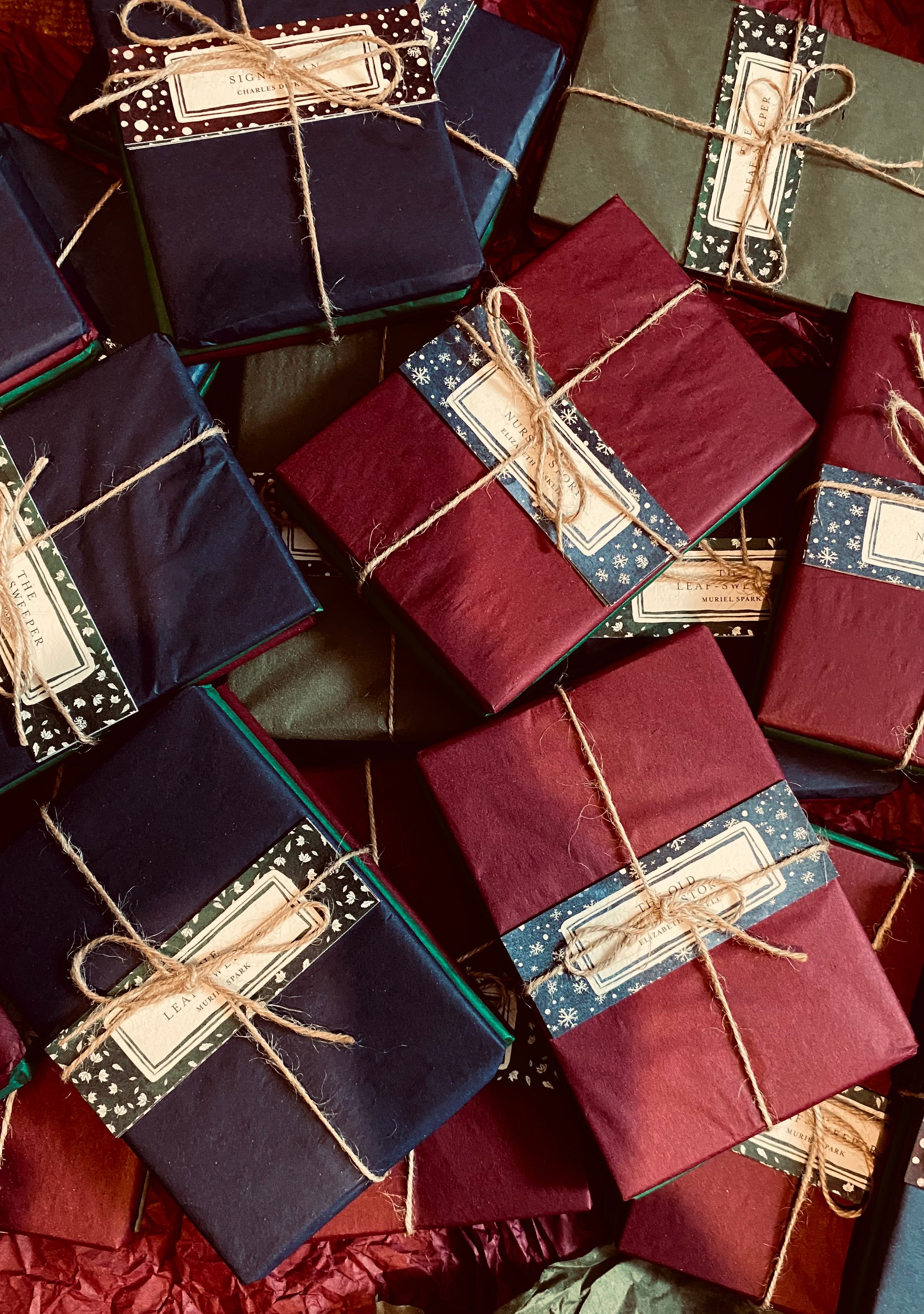
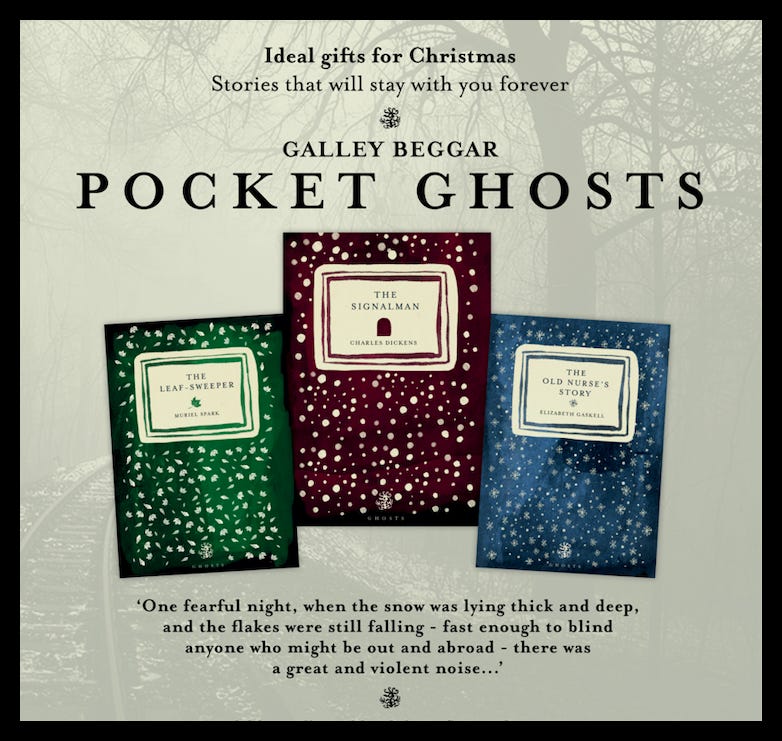
Third, we’ve just restocked on our beautiful Christmas Ghosts series and we’re selling them through our website. They arrive all wrapped up and beautiful. Something like this:
Many thanks for reading this far down! Until next time,
Fondly,
Sam
Just to correct myself slightly. Literary Twitter also did some wonderful things. It helped Galley Beggar Press a great deal and helped a lot of good writers and organisations in many ways. I’ll be forever grateful for that. But whew, was there a cost and boy did it turn sour.
Thank you and please don’t feel bad. I think from the point my own publishers apologized for me there was very little anyone else could have done. And I hope we have a chance to rebuild some freedoms now.
Agree about how shit Twitter has become, and I also agree about Kate Clanchy. (They are not entirely unconnected!) I think many more writers and publishers should have spoken up in Kate's defence, me included. None more than her own publisher, of course, but even so, if publishing collectively doesn't stand for free speech and defending what it publishes, what the hell does it stand for? It was all a very sad and sorry episode.