
Links, tips and suggestions
Reading suggestions and important ideas from the literary world. This week a heavyweight collaboration, good news, bad news, more AI, more reader tips.

Hello!
Apologies for the delay in the update for this week - or is it for last week - or the week before? I don’t know. I’ve been on holiday:


It was lovely. Thank you. But, don’t worry. I’ve had my fun. I’m back at work now and if you could see my inbox you wouldn’t be feeling quite so jealous.
But then again, I have no cause to complain. I have the great fortune to be working on interesting and worthwhile things. Here at Galley Beggar Press we’ve been busy emailing reviewers and booksellers1 who might like to read proof copies of Gonzalo C. Garcia’s precious new novel Telenovela:
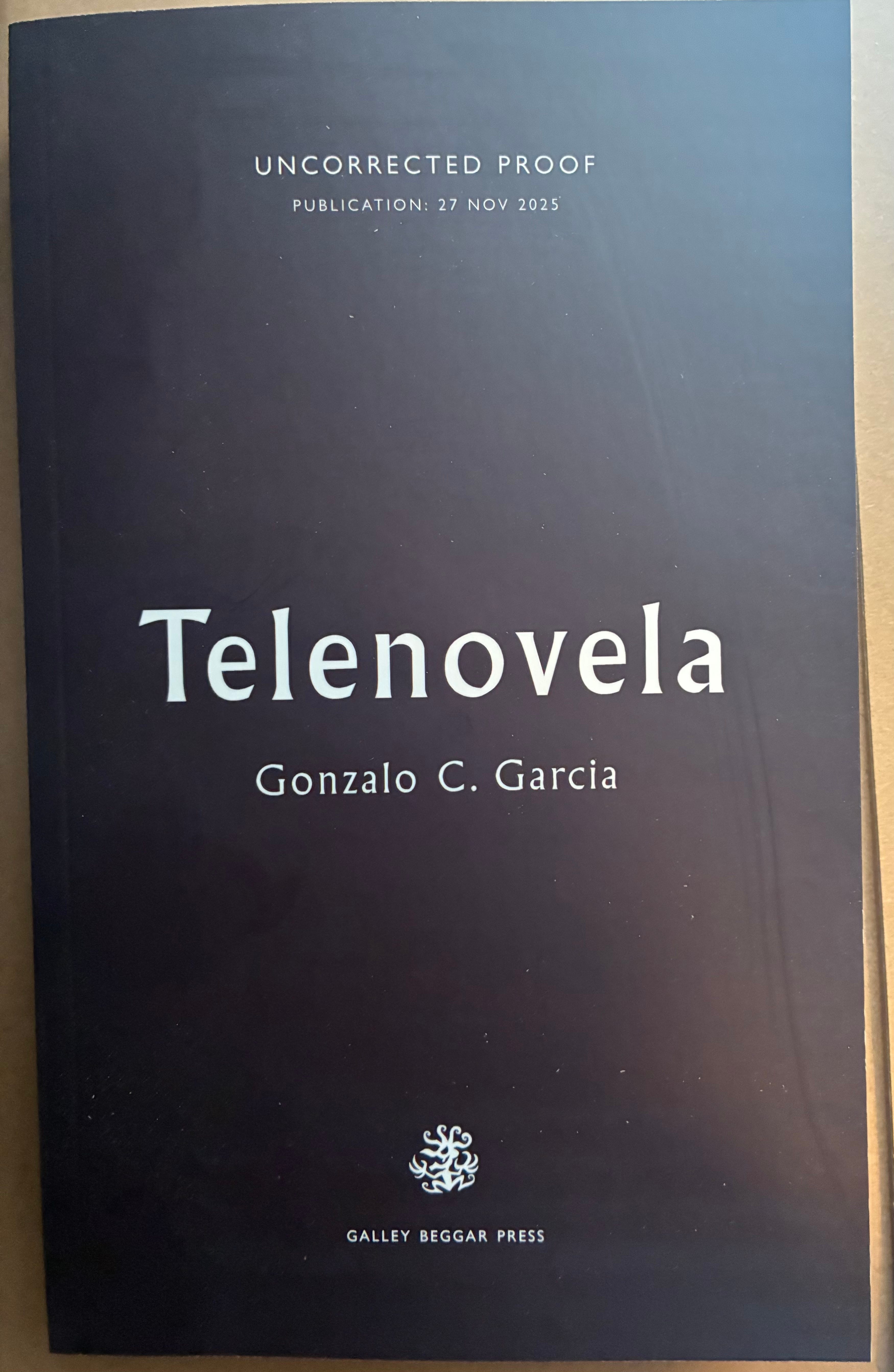
I’ll share more about this remarkable book soon. But for now, I’m conscious of time’s winged chariot and the overdue links, tips and suggestions. So let’s get down to it.
Something spooky
Let’s start with something pleasing: a Stephen King and Maurice Sendak collaboration (Yes, you read that correctly.) King has provided words to go with a series of illustrations that Sendak (who died in 2012) provided for a 1997 staging of Englebert Humperdink’s operatic version of Hansel and Gretel. (Yes, you read that correctly too.) If your mind is boggling, click the link and just enjoy the pictures.
More good news. Maybe. Please?
Some rare and actual good news from the USA. A judge has ruled that the creeps in Florida who have been removing books from the shelves for the past few years do not have the law on their side, after all. The Bookseller explains that: “Judge Carlos Mendoza of the US District Court for the Middle District of Florida sided with The Authors Guild, six publishers and several authors and students in their lawsuit against Florida over HB 1069 – also known as the Protect Our Kids Act – which came into effect in 2023 and bans books that “describe sexual content” in school libraries.”
Books that were made “unavailable” included On The Road, The Bluest Eye, Slaughterhouse Five and, of course, The Handmaid’s Tale. Now more people can read them again - and a precedent has been set for the rest of that poor benighted nation and its attempts to suppress freedom of expression.
Don’t get too happy though. The book banners are now hard at work in Canada. With their usual flair for irony, the puritans (this time the creeps seem to have emerged from Edmonton, Alberta) have again, of course, included The Handmaid’s Tale on their list of verboten titles. Luckily, the Canadian government has asked them to explain themselves… The full story is worth reading. Especially if you enjoy being outraged, relieved, outraged again, but also full of love for the more decent people in Canada.
[EDIT: There’s more to this story than I originally surmised… Some very helpful comments have come in from Adam's Notes and John Leman Riley detailing more of the confusing in and outs. The finger I pointed was kind-of aimed in the wrong direction… More explanation in the comments section!]
The fight against the slop bandits continues
One to watch. Anthropic (the evil AI-wing of evil fascist-supporters Amazon) has settled a class action lawsuit with authors who complained it was using stolen copyrighted material to train its slop-machines.
"This historic settlement will benefit all class members," the authors' attorney Justin Nelson said in a statement. "We look forward to announcing details of the settlement in the coming weeks."
I also look forward to learning how much money the authors are going to get back - and whether this means all those thieving AI evil-corps are all going to get sued back to the pre-digital age. One can only hope for the best…
The sound of the suburbs?
Silence apparently. Not only have Americans stopped doing democracy, decency, freedom and all that old-fashioned societal stuff, they’ve also apparently turned their backs on the suburban novel according to an article in The New York Review. O times! O customs!
No Ghosh
Amitav Ghosh has written a book that he’s planning to keep sealed for 89 years before anyone can read it. Seems like a splendid idea. Especially if it’s as bad as The Sea Of Poppies and we are thus spared… No, that’s mean. This is actually part of the admirable Future Library Project, whose website contains this lovely explanation: “Deep inside the Nordmarka wilderness area in Oslo stands a forest within the forest: The Future Library. The art project thought up by Scottish artist Katie Paterson and commissioned by Bjørvika Utvikling, consists of planting a forest to grow the materials for a unique library for people living one hundred years from now.”
The general scheme is that famous authors hand over books to the library to store away for future generations to read. Ghosh told The Guardian that it’s a “profound honour and a humbling act of trust,” which “compels us to think beyond our lifetimes, to imagine readers who have not yet been born”. Cancel my scepticism. This sounds like a fine thing.
Reader recommendations
Thank you for all the kind words and comments on the previous Links, Tips and Suggestions post and various parts of Substack. We’ve got more excellent recommendations this week.
First up, hudsonettle suggests a “valuable read with regard to 1930s Germany”:
I have just finished reading "Crooked Cross" by Sally Carson (1901 - 1941). This novel, first published in 1934 and recently by Persephone, was written by an English woman who spent time with friends and lived for a while in Germany, in Bavaria. It depicts the first years of Hitler and his ideology in power in a small town in Bavaria, south of Munich, a fictional account strengthened by her experience. The countryside (mountains, vegetation) is idyllic, as is home life on Christmas Eve 1932, when Family Kluger gather together round the tree. But below this surface of domestic harmony lurks the general bleak situation, the reality of their lives - the frugality, the lack of decent work for the sons, and so, of optimism for a satisfying future. Gradually the reader is shown how promises of a better life kindle the sons' enthusiasm to support a party that gives them such hope. How extremist views work their way through the community. How thought and behaviour spin out of control, leading to inhumanity and brutality. The moral courage of he daughter, Lexa, stands apart from her family, her friends and all around her.
A disturbing, extraordinarily prescient read, a warning that ideology promising a better future can take hold of discontented people's minds with disastrous consequences.
Zadie Smith gets a thumbs up from Josephine Rose:
Zadie Smith as our current Dickens - yes! (On Beauty is wonderful; her essays, too.)
Drew Gummerson weighs in on the debatable qualities of Small Things Like These:
I listened to the audiobook. I just don’t get all the fuss. It was ok. But it was so average.
Finally, two splendid tips from Liz S
I really liked A Passage North by Anuk Arudpragasum, set in Sri Lanka after the end of the civil war. It's a contemplative novel about the processes of grieving and love and relationships in general. Some readers have found it too ponderous. I suppose it depends if you enjoy sentences like this:
“He wanted to know whether she too had felt the weight of things increasing upon her in the last few years, whether she too had become just a little more fatigued with the passing of time, but it was precisely these answers that couldn’t be communicated via email, precisely these answers that couldn’t be given or asked in words sent through the void.”
In nonfiction I've started The Dawn Watch: Joseph Conrad in a Global World by Maya Jasanoff. In her introduction Maya Jasanoff says, "...Conrad's world shimmers beneath the surface of our own." I think it's going to be good even though the fact Conrad seems to have often been depressed doesn't feel encouraging for our present state of global affairs!
I’d be willing to give those kinds of sentences a go. I think…
As for me, I’ve been marvelling at the work of Leonora Carrington - and particularly The Hearing Trumpet.
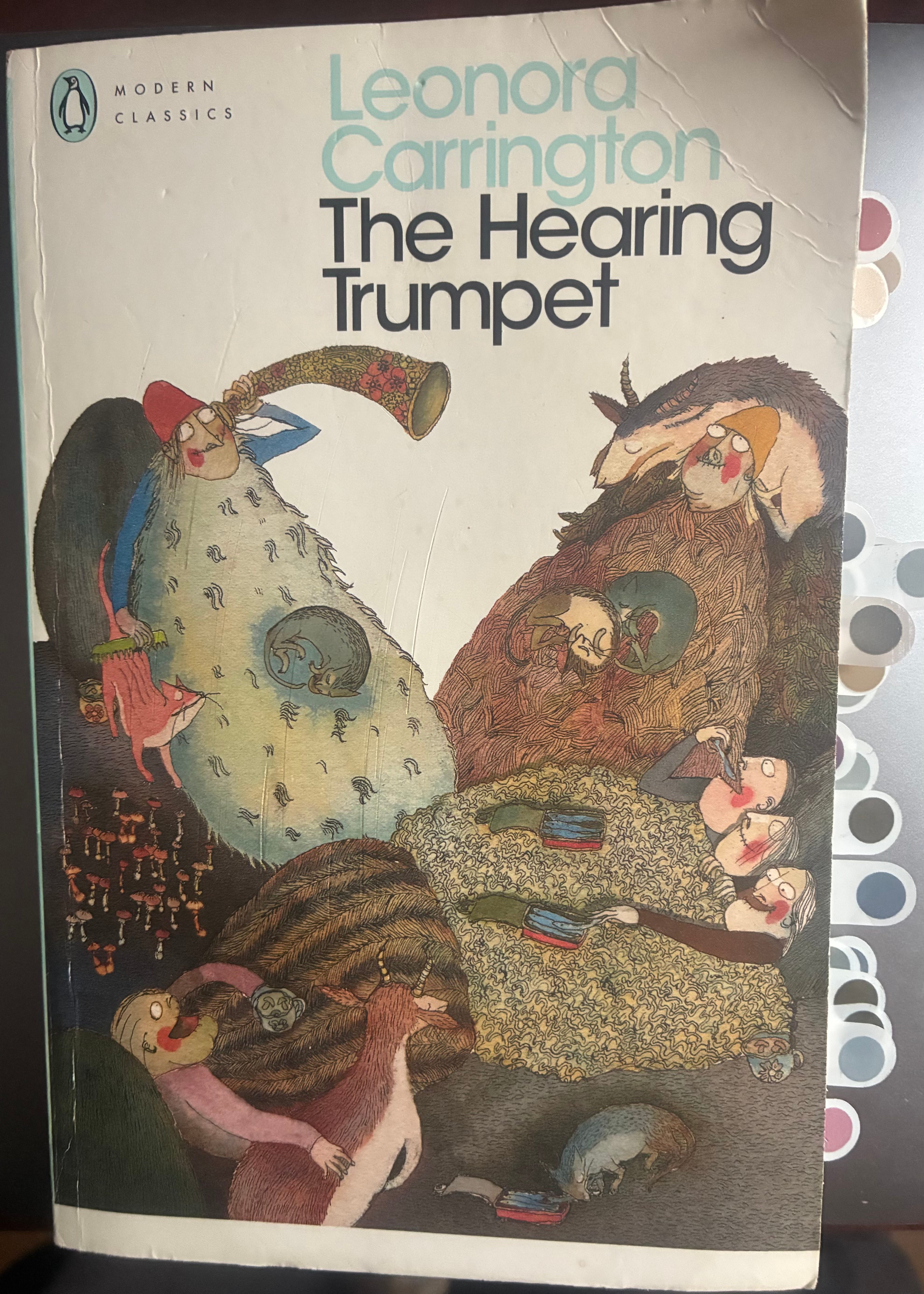
Carrington has been this week’s subject on the Galley Beggar Critical Reading course… and: crikey. It’s fascinating reading a surrealist novel. The urge to make sense of words on the page is very strong and it often felt like a tussle. More simply, it was sometimes boring. But at other times, it was exhilarating. Extraordinary. Funny. Enlightening. Wonderfully strange. When you can surrender to this book in the right way, it’s a marvel.
Coincidentally, it’s also been the subject of a recent Backlisted podcast episode, which I enjoyed a great deal. I also recommend this extraordinary interview with her cousin Joanna Moorhead. There are some fine shots of her house and her artwork - and her not-suffering-fools approach to the questions she’s asked is hilarious.
That’s enough for now. If you have recommendations of your own, please do share them in the comments below. And I’ll be back with more soon.
Fondly,
Sam
Let me know if you yourself are a reviewer or UK bookseller and want to read it! Will try to help you out.
"Luckily, the Canadian government has asked them to explain themselves…" I think it's slightly more complicated than that. This began with the right wing government of Alberta stirring up a moral panic over an alleged pornographic comicbook in school libraries.
The school board went ahead and prepared to remove absolutely everything with sex in it from school libraries (either as "vicious compliance," an epic troll, or because they themselves are lickspittles, all depending on who you ask). The leader of the right wing government is extremely online, and sensitive to the charge of book banning (she likes to champion far right 'free speech issues' which generally aren't, and one of the banned books was by her favourite author, Ayn Rand), so she has accused the school board of going beyond their remit, even though they were doing what her education minister told them to do.
So the government has reversed course for now, but they're still very actively trying to whip up a moral panic based on the idea that children might have access to a diversity of books.
The “Canadian” book-banning story is labyrinthine due to the various layers of government. The federal/provincial split is more strongly effective (or ineffective? Or maleffective?) than in the UK. The federal government doesn’t have much to do with the day-to-day education (or health) stuff beyond providing funding and setting a baseline standard.
The Alberta provincial government is in charge of actual policy detail and is currently pandering to a mini-MAGA minority (itching for separation and, in the most extreme cases some sort of Alberta-US connection.
The local authority (in this case, Edmonton) is then responsible for putting the provincial government edicts into effect. Edmonton (sometimes known as “Redmonton” as it’s an island of mild leftism in a sea of conservatism) did that, but after the blowback the provincial government is crying foul, describing what they did as “vicious [sic] compliance”, though they haven’t explained why these books, many of which depict sexual activity, shouldn’t be banned under a provincial law that bans books that depict sexual activity. One might almost suspect that they meant to ban only those books that depict *particular forms* of sexual activity, but who am I to say?